


Vaseline was founded more than 150 years ago and has turned into a top performer of late for parent company Unilever, having seen an 11% compounded annual growth rate over the last four years, becoming a billion dollar brand and growing volume more than 10% in both 2024 and the first half of 2025. The brand also serves as a template for the CPG giant’s portfolio.
“It has been on a remarkable journey, pioneering the kind of desire at scale thinking we want now to replicate across all our brands,” said CEO Fernando Fernandez on Unilever’s Q2 2025 earnings call.
Executives attribute Vaseline’s renewal to a combination of product innovation that taps into trends in a transforming body care space and strong marketing that follows Unilever’s intensifying focus on social-first and culturally-rooted efforts. The brand inserting itself into TikTok trends around nighttime routines, is one recent example.
“We reallocated our budget to lean much more into creator-led content, as Unilever calls it, leaning more into creators, influencers, [user-generated content] to tell the brand story a bit more, versus only being led by the brand,” said Kate Godbout, head of Vaseline brand for North America.
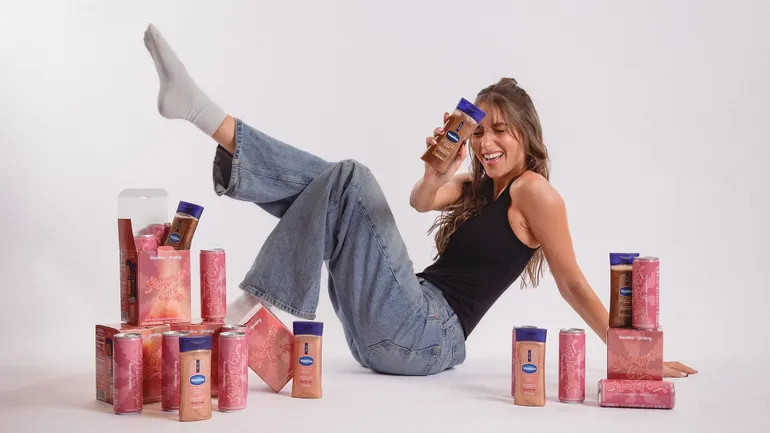
Vaseline earlier this month teamed with reality TV star Amanda Batula and her Loverboy beverage brand, bringing together packs that included three cans of Loverboy iced tea and one bottle of Vaseline’s Glazed & Glisten Gel Oils. The brands marketed the partnership with an experiential event in Brooklyn and saw the packs sell out within 12 hours of launch.
“Especially for a heritage brand, the idea of cultivating community is so important,” Godbout said. “Deeply understanding your consumer on the most intimate level — their hopes, dreams, desires, barriers to using product — beyond basic needs… really understanding their passion points, figuring out how you can tap into that and providing real utility in their lives.”
Godbout joined Unilever in July after three years as CMO for Scholl’s Wellness Company and previous stints with L’Oréal, Neutrogena and Mattel. Marketing Dive spoke with the executive about the evolution of the marketing organization, the award-winning “Vaseline Verified” campaign and how artificial intelligence will change how marketers work.
The following interview has been edited for clarity and brevity.
MARKETING DIVE: How has Unilever brought together innovation and marketing in the organization?
KATE GODBOUT: Earlier this year, there was a structural change in the beauty and wellness group where we brought together end-to-end marketing. There’s one half of my team that’s focused on product innovation and portfolio strategy, but the beauty of it is they’re very closely working alongside our demand-creation team. We’ve brought specialists in who deeply understand PR, influencer, creator-led content, media strategy, more traditional advertising creative and working with agencies.
We have both sides of the house together as one, so we’re meeting weekly as a team in a forum we call the “culture squad,” where we have the innovation team sitting alongside our agencies and the demand creation teams to talk about the signals that are happening in culture and things that are getting a lot of traction for the brand as it relates to our social content. Those meetings are meant to be very action oriented.
But then we also have richer conversations about how to build social-first innovations. How do we take all this great stuff we’re learning in culture, all the things that consumers are really connecting with, and then feed that into the innovation funnel to help inform the names of the products, the textures or the formats, what kind of content strategy we want to build, how we want to bring it to life digitally and in-store.
Unilever had the intuition to make sure you have the right people at and around the table to have these conversations and your agency expertise embedded into those conversations on a weekly basis. Sometimes I wonder if we should be doing it more than once a week, because culture moves so fast. But it’s a really great framework to have in place of making sure that signals are being read and the dots are being connected.
The “Vaseline Verified” campaign is a good example of a social-first effort. What can you tell me about how it came together?
We saw that there were over three and a half million organic posts happening in the social space, mainly on TikTok, but definitely on Instagram as well, where people were using Vaseline for very unexpected purposes, as well as expected purposes. There was this amazing versatility of the product being showcased.
We also tapped into the insight that consumers are overwhelmed and bombarded with information on social, and they’re having a really hard time discriminating what is real, what is safe and what’s effective versus what’s just hype.
We took this community movement of people talking about the use of product, and actually brought it into the labs where the science became part of the story. It was playful, fun and quirky, but we tested all of these amazing hacks that consumers had for Vaseline jelly in the lab, and either verify that they are safe and effective to use the product for, or they’re not effective at all.
We awarded these creator seals. We got them involved in the conversation. We pushed out our own content on other “Verified” hacks of what we’ve already tested that the product could be used for.
It showcased a different personality of Vaseline as a brand. It allowed those creators into the conversation to co-create the brand. And there were real, quantifiable results tied to it: we had a 43% uplift in our sales, over 136 million views and massive positive sentiment of 87% with consumers.
As social-first investment increases, how are you measuring the channel?
We have a system in place where we track metrics like buzz, sentiment, shares and online discoverability. We track that on a quarterly basis. How do we move the needle on those metrics as we design campaigns? There’s a lot of internal discussion on how to make the campaign stronger.
We’ve surrounded ourselves with really strong agency partners that are super creative and think about that unlock. You get the amazing brain power of all these people that are looking at it from different angles … to really help you mold and shape the campaign with a lot of great, creative minds all coming together with the same common, aligned goal.
How does Vaseline’s “White Lotus” partnership fit into the picture?
Entertainment property or brand collaborations are all about intentionality. How do you find ways to elevate your brand values and what the brand stands for — the personality, the tonality you want to bring forward with things that are super culturally relevant — that you know will get a lot of buzz, but have a way to bring your product in to build relevancy with consumers in an interesting way?
“White Lotus” was led out of Southeast Asia markets with Gluta-Hya. They got a lot of amazing traction out of it based on where “White Lotus” was filmed; it was really relevant to bring that product forward there.
Collabs are something that we’re looking at very seriously and continuing to think about. Who are the interesting and unexpected partners that our community really connects with, and how do we find those partnerships to elevate the brand conversation in an interesting way? We don’t want to do too many, because there’s the concern of fatigue. But if you do the right partnerships at the right time, it can really generate a lot of value for the brand and potentially bring in new consumers that might not have considered you before.
How do you see AI changing your job as a marketer?
I think of AI as this amazing thought partner and co-pilot, but the fundamentals of what we’ve learned [about] growing brands over the years, that doesn’t go away. How do you use AI to help supplement workflows of things like content creation to elevate your work and provide a different perspective, but not to necessarily take over what you’re doing?
We’re definitely using [AI] in places, on some of our content supply chain, but I’m also intentional about where the AI-driven content shows up with a brand like Vaseline that has such deep trust and heritage in the market.
It’s exciting to think about how much capacity is going to be freed up through the use of AI tools and workflows, and how that creates more space and time for you to be creative and strategic and to think more expansively about the brand.
Some of the low-value-added activities my team and I are spending time on today, how can we automate that work and then free up the time to just dream and think about how that manifests in different product executions, activations and ways to connect with our community?
Read the full article here